Westchester Power Washing transparent logo Service Areas

Westchester Power Washing

(914) 490-8138
  • Power Washing
    • Pressure Washing
    • Soft Washing
    • Power Washing vs Soft Washing
  • Home Washing
    • Roof Washing
    • Driveway Washing
    • Walkway Cleaning
    • Brick, Stone and Paver Washing
    • Patio and Deck Washing
    • Outdoor Furniture Cleaning
    • Fence Washing
    • Gutter Cleaning
  • Areas Served
  • Gallery
  • About Us
    • Blog
    • Reviews
    • Contact Us

Understanding the Basics of Removing Graffiti

Graffiti refers to any drawings or writing applied to public surfaces, usually with spray paint. Commonly the result of vandalism, graffiti is unsightly and significantly hurts curb appeal. Even worse, the application of spray paint can seriously damage some surfaces like brick and stucco. Removing graffiti has its own set of challenges, but it has to be done (and done well) if you want to restore your property to its original glory. 

Colorful graffiti letters on brick wall background. Understanding the Basics of Removing Graffiti

How to Get Rid of Graffiti

Removing graffiti requires an impressive amount of finesse. An inexperienced hand will leave bits of paint or a “shadow” of where the graffiti used to be. Without experience to temper pressure settings, DIY attempts to clean away graffiti can also damage the material underneath, leaving scoring or causing it to chip. Entrusting the task to the professionals is the best way to make sure the graffiti is removed completely and satisfactorily.

Removing graffiti is usually a two-part process, applying the right blend of chemicals to wear down the spray paint and then rinsing the surface clean with a good pressure or power wash. A professional pressure washing team will know which solutions and methods are best for your specific situation. 
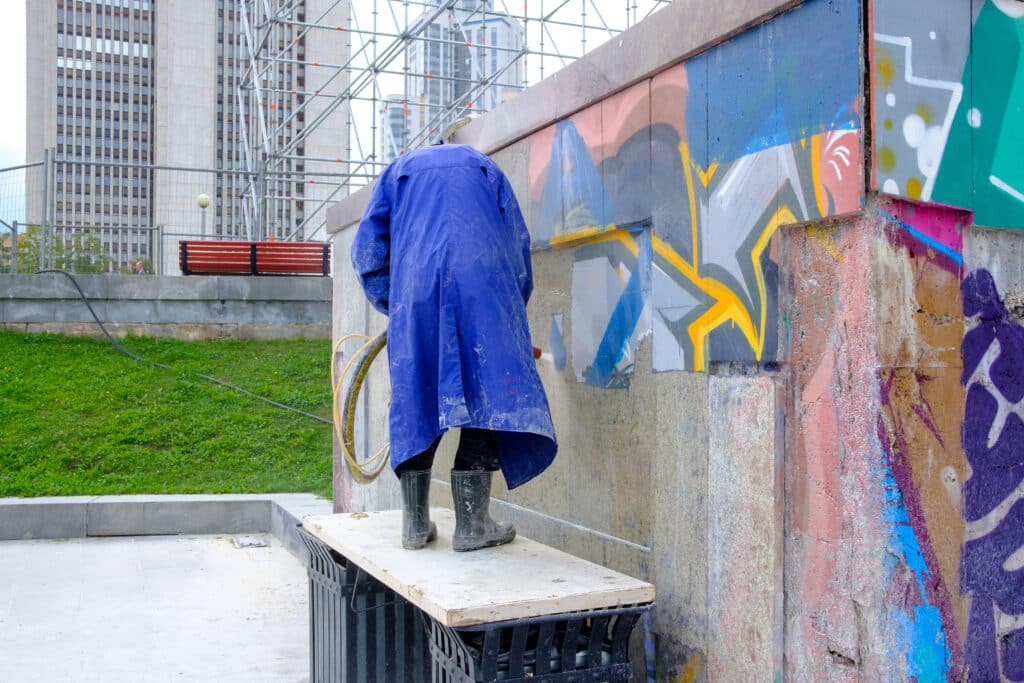
Russia, Yekaterinburg, August 14, 2019 a man in a raincoat washes away graffiti on the city wall with a stream of water and chemicals. destruction of modern art. Understanding the Basics of Removing Graffiti

The Correct Chemicals

While sometimes it is possible to use pressure washing alone to remove graffiti—especially if the paint hasn’t had long to sink into the surface—usually treating the stain with chemicals is the most important step. The right cocktail of chemicals is effective at removing graffiti for one of two reasons: either it will wear down the paint’s color or, even better, it will destroy the glue within the paint. 

If you don’t want to damage your painted surface further, it is vital that you use the right chemical solution to clean away graffiti. This often includes trisodium phosphate (TSP), but the mixture should reflect the kind of surface being cleaned and how long the paint has been there. How the cleaners are applied is also important since you don’t want to drive the chemicals into the surface.

It is common to apply the chemical cleaning solution with a pressure washer on a low setting: 80 psi is a safe choice. This will coat the surface of the spray paint with the chemicals without forcing the cleaners into the material’s pores. Once the mixture has had a little time to work on the graffiti, it can be rinsed off with a higher pressure. 

Removing Graffiti with Pressure Washing

A pressure washer will be your best friend when removing graffiti. In some cases, it is all that is needed to strip away the unwanted art. In others, pressure washers can be used to apply chemicals and to rinse them and the paint away. Sometimes, however, you need a little more power to clean away graffiti. Sometimes this can be achieved by using a turbo nozzle, which focuses a pressure washer’s spray even more. In other instances, you will need to add heat.

Heat is the biggest difference between pressure washing and power washing. Power washers incorporate a heating element, allowing them to utilize rinsing power 100-times that of cold water. Hot water gives home- and business owners 100% success in removing graffiti 98% of the time. We recommend using hot water at low pressure to layer the chemicals onto the spray paint’s surface, then rinsing at higher pressures to completely erase the stain. 
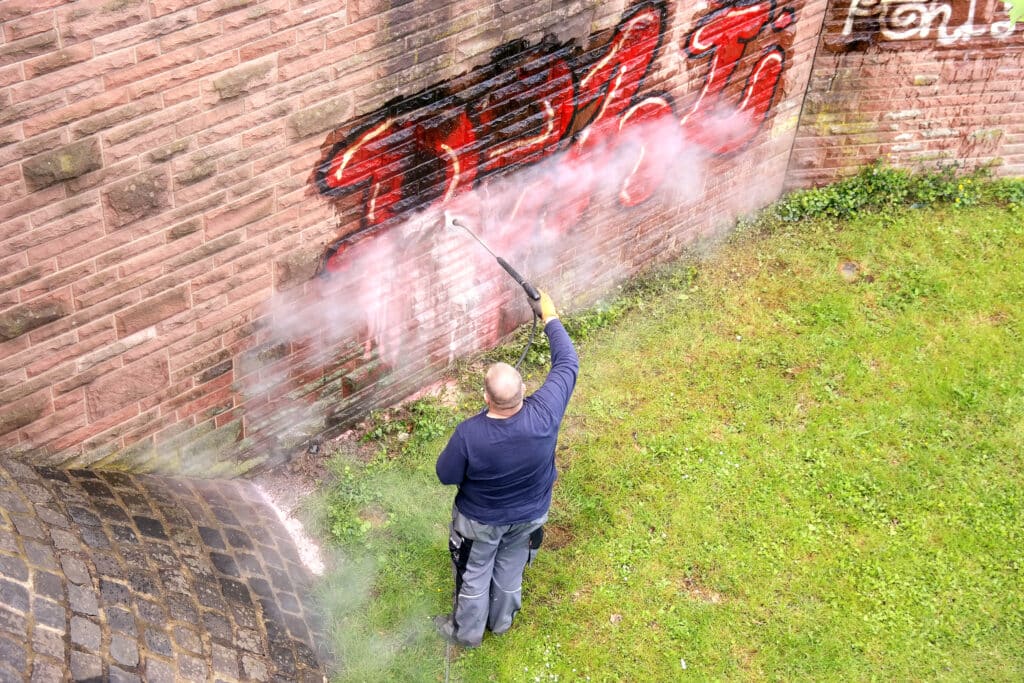
GERMANY, FRANKFURT AM MAIN - May 07.2014 : Worker of municipal service of city cleans a wall from graffiti. Understanding the Basics of Removing Graffiti

Is It Possible to Power Wash Graffiti Off of Brick?

Getting graffiti off of brick can be troublesome for a number of reasons. Because brick is so obviously porous, the wrong pressure can chip pieces of it off or embed the spray paint further into the material. Use gentler chemicals and pressure settings to apply them. Consult with your local pressure washing company for recommendations or let them manage the job for best results. 

Will Pressure Washing Remove Spray Paint from Metal Surfaces? 

If you discover graffiti on your vehicle, it can be tempting to reach for the pressure washer. We recommend you pause and consider professional assistance. Metal, especially when it is used to shape vehicles, doesn’t always hold up well under a stream of pressurized water. While a pressure washer can usually strip away spray paint from metal, the results aren’t always improved. 

The success of pressure washing metal depends very much on the type of nozzle used, how the paint was applied, and how long it has been there. Interestingly enough, unlike other surfaces, paint added more recently can be more difficult to remove from metal surfaces. Get a professional opinion before moving forward.
Filed Under: Power Washing

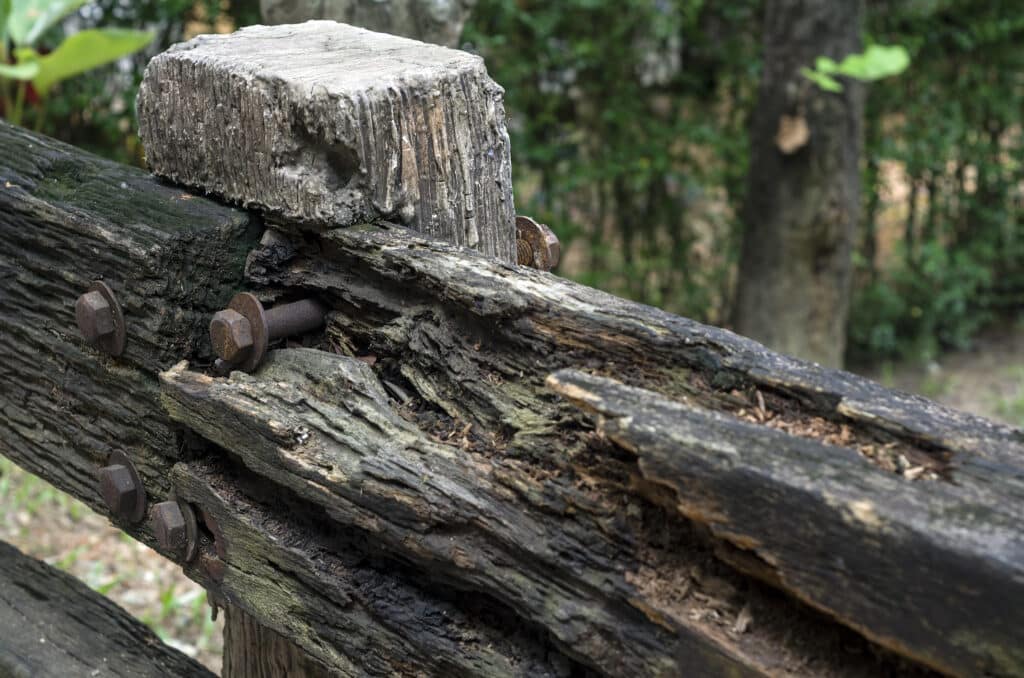
Rot is one of the necessary evils in the world. It is a natural component of the decomposition process that makes our world self-sustaining, but for all its necessity, it can be a real thorn in homeowners’ sides. If you’re worried about wood rot on your fence or home, here are some things you should know.

A Complete Guide to Understanding Wood Rot

The Rot Problem

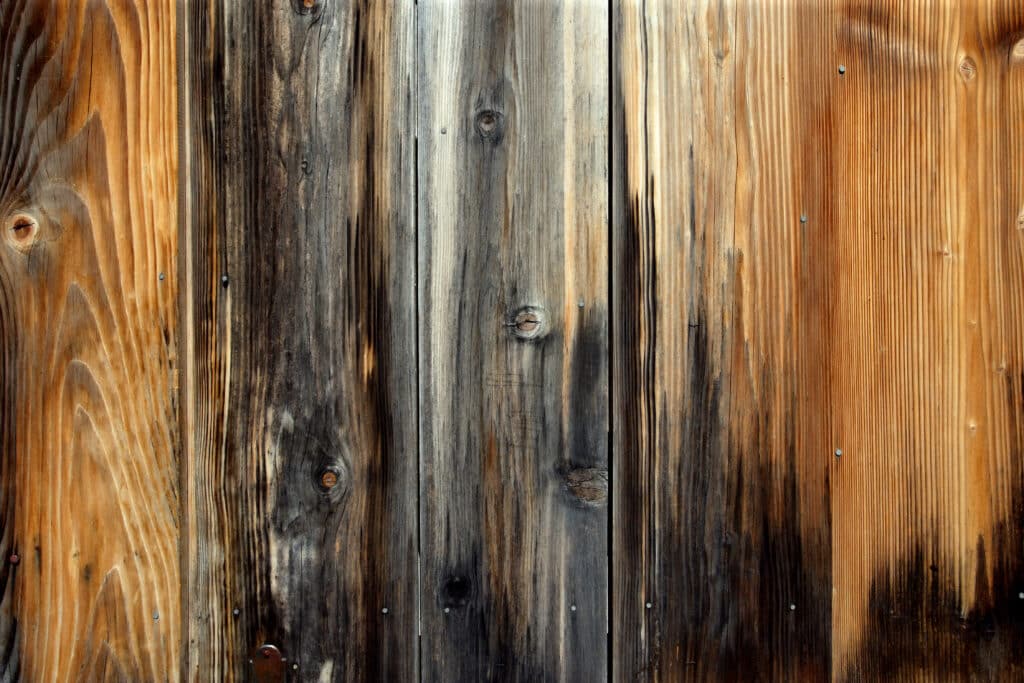
Wood rot is a form of decay triggered by moisture, and places where the moisture content is high (fence panels touching the ground, shady areas, and spots near gutters or around plant life) are trouble spots you should keep your eye on. When rot is left on its own, it spreads rapidly, eating away at wood and compromising its structural integrity. 

When wood is slated to be used in construction, it is first treated. However, this is not always a failsafe to prevent rot from taking hold. No amount of painting over rot will remove it, and this is one of the reasons why you should pressure wash wooden surfaces before painting them. Otherwise, trapped rot can cause the paint on your fence, deck, or exterior walls to peel, letting in even more moisture.

Catching Wood Rot Early On

Wood rot looks different depending on the stage of its growth and medium on which it grows. Homeowners should learn to recognize rot at any stage to catch and get rid of it before it can spread. Again, be especially careful of wooden areas that can soak up a lot of moisture, places like deck posts and the base of fences.

  • Early-stage rot often looks like cotton wool. It is also common to see mushrooms sprout. If you see mushrooms growing near your wood, take action at once. 
  • Discoloration may also be an indicator for rot. If the discolored area is soft or spongy to the touch (we recommend checking with a screwdriver or the handle of a fork), rot is clearly indicated.
  • Visible dampness is also a red flag. Keep an eye out for beading water droplets or other condensation. If you don’t have rot development in these areas yet, the likelihood that you will is high if you don’t make a change to prevent it.
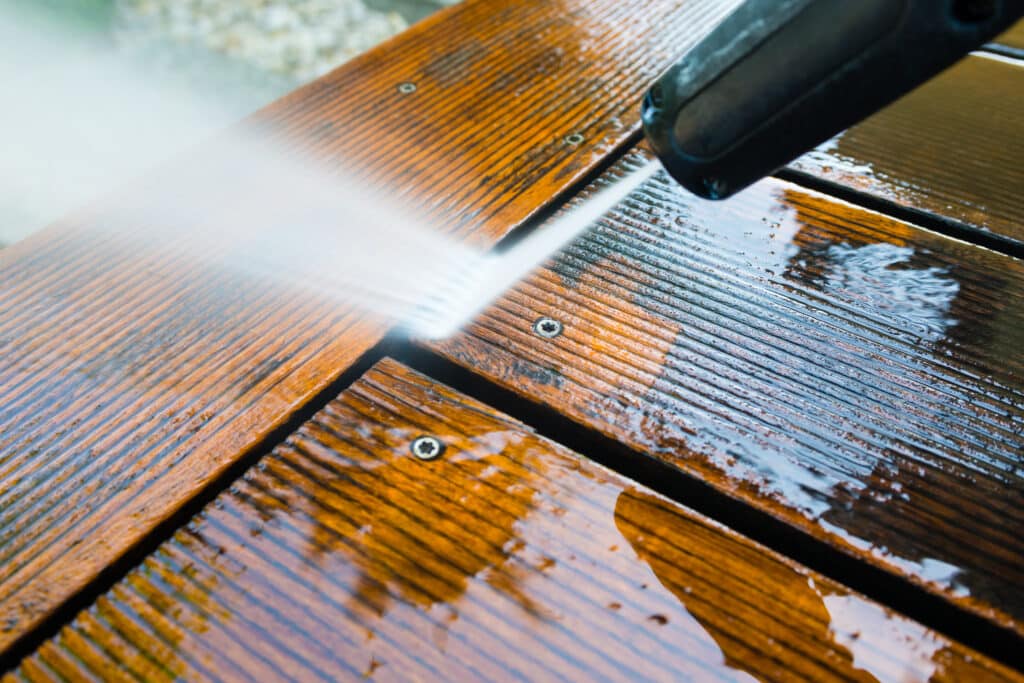
cleaning terrace with a power washer - high water pressure cleaner on wooden terrace surface. A Complete Guide to Understanding Wood Rot

Can Rot Damage Be Repaired?

Unfortunately, rot damage cannot be reversed. Doing so would require regrowing the cellulose that the rot consumed. If your deck or fence does sustain rot damage, the first step in addressing it is eradicating the wood rot. This can be done with antifreeze which is toxic. If the damage is minimal, you can also fill in any channels or holes with epoxy, strengthening the planks. If, however, the damage is extensive, the best course of action is to replace the compromised wood.

The Importance of Addressing Wood Rot

When wood is rotten, its structural integrity takes a hit. A fence cannot adequately protect your property if the wood is soft in the same way a rotten deck cannot support the weight of gathered parties. If you have plans to clean or paint your wood, pressure washing rotten areas will only exacerbate the damage. If you plan to pressure wash your deck or fence, checking for rot is an essential prerequisite. 

A Complete Guide to Understanding Wood Rot

Preventing Rot

Homeowners have several tools at their disposal for preventing rot development on their property. East coast homeowners especially should make these checks and precautions a priority to protect their properties despite humid conditions.

  • Watch your plants—Dripping trees, tall grass, and closely growing shrubs all run the risk of wetting wood enough for rot to develop. Be mindful of your foliage, and do what you can to keep your wood dry.
  • Block out the moisture—You can’t keep your wood dry all the time on the New York coast. Preparing your wood by staining or painting it is a good way to prevent moisture from soaking into your wood and creating a climate for wood rot growth.
  • Consider pressure-treated wood—This precaution also helps keep moisture out. The pressure-treating process combines chemical treatment and pressure to make wood even hardier.
  • Caulk exposed gaps—If you notice gaps or cracks in your wood (especially around exterior doors and windows), a fresh coat of a latex exterior caulk can keep rot at bay.

Alternatives to a Wooden Fence

If you are still very concerned about rot growth on your property, you can eliminate the risk for your fence at least with a structure made of a material other than wood. Some materials like Trex mirror the appearance of wood without having the same susceptibility to rot. Others like vinyl, stone, or ornamental metal lend a different look but the same kind of protection.

Filed Under: Power Washing

Between pollen and Daylight Savings Time, it is easy to wonder if there isn’t a conspiracy to make us dislike spring after all. Pollen tends to be nearly ubiquitous this time of year, and the results range from unattractive to unhealthy. You can do much toward minimizing these negative effects by pressure washing pollen away without delay. Let the professionals at Westchester Power Washing manage the task for a quick and efficient clean. 

Side view of woman blowing nose into tissue in front of flowers. 5 Reasons to Make Pressure Washing Pollen Away a Priority

The Problem with Pollen

Pollen is an essential part of the plant propagation process. The particles are intentionally minute and essentially weightless so they can be carried on the wind or water or on the legs of insects or animals. This haphazard method of dispersion gives plants a better chance of propagation, but it makes for a very messy season. 

Pollen grains can settle just about anywhere, from roofs to sidewalks to siding to vehicles to gutters. When they land on frequently-trafficked surfaces, they can quickly become ground into them, and the grains can also settle into every possible nook and cranny. Pollen that is not taken care of quickly tends to build up, and when it gets wet, it gets sticky. Truly, pollen can range from inconvenient to unhealthy.  

Is Pressure Washing Pollen Away Possible?

Pressure washing pollen is often the best way to get rid of it. Simply taking a garden hose to it is usually not enough and can even make the situation worse. That being said, inexperienced pressure washing can do the same, so we recommend professional services for best results. Most surfaces can be pressure washed to rid them of pollen, but some materials—particularly siding and roof shingles—require more delicate treatment to avoid damaging them. A good soft wash is perfect.

Because pollen can cake, bake, and stain when left on too long, we recommend not waiting too long before pressure washing pollen away. Twice a year is a good metric to aim for. Because regular pressure washes prevent pollen and other debris from doing more serious damage, making it a priority can ultimately save homeowners time, energy, and money. We recommend having your property power washed shortly after the height of pollen season has passed.

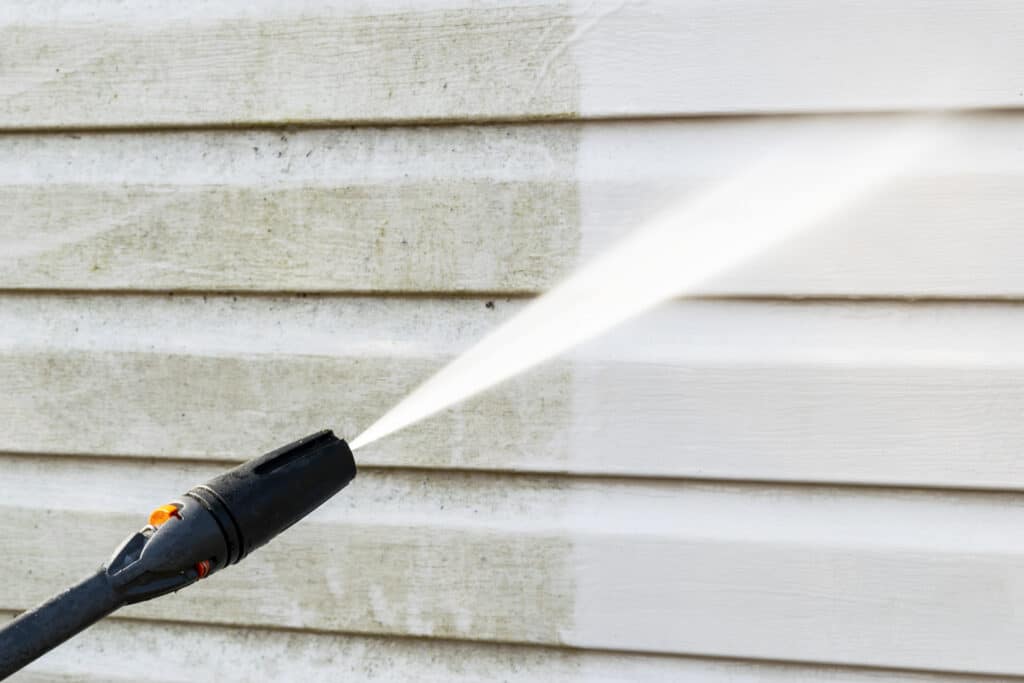
Cleaning service washing building facade with pressure water. Cleaning dirty wall with high pressure water jet. Power washing the wall. Cleaning the facade of the house. Before and after washing. 5 Reasons to Make Pressure Washing Pollen Away a Priority

Reasons to Power Wash Pollen

The reasons for pressure washing pollen away early on are many and range from slightly inconvenient to medically important.  

Improve Curb Appeal

Pollen will coat every exposed surface in a yellow and sometimes sticky film. This makes homes and vehicles look in worse repair than they really are and significantly injures their curb appeal. The grains are not picky; they will stick just about anywhere, and whatever they stick to is sure to be covered. Get a fresh appearance by pressure washing your home. 

Prevent Staining

In addition to being initially unsightly, pollen can also cause staining, propagating its filthy appearance long after the first spring buds emerge. Taking steps to wash pollen away early on can prevent staining and protect your home.

Cut Back on Health Concerns

Even more important than pollen’s unattractive qualities are the health challenges it poses. Pollen, like other particulates, can initiate allergies, resulting in scratchy throats, runny noses, itchy eyes, and more. In addition to inspiring asthma attacks, it can also cause sinus troubles, choking, and other breathing problems. Pressure washing can remove pollen and other allergens like dust and debris from circulation.

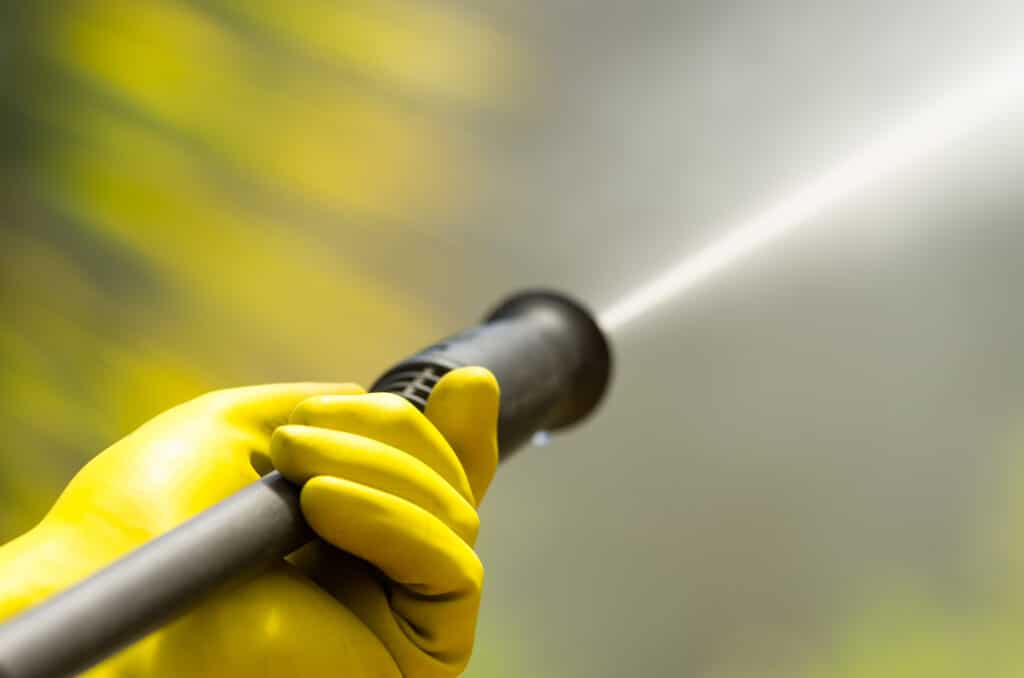
Closeup black head of high pressure water cleaner as waterbeam emerges. 5 Reasons to Make Pressure Washing Pollen Away a Priority

Wash Away Worse Things

As insidious as pollen is in the health department, it isn’t the worst health hazard that can stick to your walls. Growth of mildew and mold is even more likely to stimulate asthma attacks and other respiratory problems. It can also cause physical damage to the structure of your home, so it is critical to remove any biological growth early on. Pressure washing pollen can also rid you of these bigger threats and prevent their growth in the first place. 

Prep for Paint

When painting anything, it is important to start with a clean slate. This helps prevent particles or debris from gumming up painting equipment and it yields a cleaner paint job. Even more importantly, a freshly cleaned surface facilitates better paint adhesion. Pressure washing pollen off of the exterior surfaces you plan to paint is essential, and a professional can do the job in no time. It is wise to put off both cleaning and painting until you’re sure the pollen frenzy has quelled because your surface must be thoroughly dry when you paint and you don’t want any pollen particles flying in and getting stuck in your wet paint.

Filed Under: Power Washing

  • « Previous Page
  • 1
  • …
  • 10
  • 11
  • 12
  • 13
  • 14
  • …
  • 23
  • Next Page »
main logo
1928 Commerce St.
Yorktown Heights, NY 10598
Phone: (914) 490-8138
Monday 6:00 AM - 9:00 PM
Tuesday 6:00 AM - 9:00 PM
Wednesday 6:00 AM - 9:00 PM
Thursday 6:00 AM - 9:00 PM
Friday 6:00 AM - 9:00 PM
Saturday 6:00 AM - 9:00 PM
Sunday 6:00 AM - 9:00 PM

Westchester Power Washing

Recent Posts

  • Tarrytown Pressure Washing: The Questions That Separate Professionals from Problems
  • Katonah Power Washing: The Company You Stop Worrying About
  • Pleasantville Pressure Washing: 40 Years of Local Knowledge
  • Pound Ridge Power Washing: Why Your Materials Change Everything
  • Briarcliff Manor Pressure Washing: The Spring Ritual That Protects Your Home
  • Scarsdale Power Washing: What Winter Left Behind
  • Hardwood Siding Power Washing in Scarsdale, NY – Amazing Before & After Results
  • Brick Patio Power Washing in Rye, NY – Amazing Before & After Results
  • Protecting Irvington’s Architectural Heritage With Proper Pressure Cleaning
  • The Hawthorne Homeowner’s Guide to Preventive Pressure Washing
  • The October Rule: Pressure Washing Secrets Harrison Homeowners Know
  • Living By The River: Croton’s Unique Power Washing Challenges
  • Chappaqua’s Unspoken Truth: Why Some Homes Always Look Perfect
  • What Bedford Hills Homeowners Should Know Before Winter
  • Why Bedford’s Fall Fundraising Season Demands September Power Washing

Pages

  • Power Washing
    • Pressure Washing
    • Soft Washing
    • Power Washing vs Soft Washing
  • Home Washing
    • Roof Washing
    • Driveway Washing
    • Walkway Cleaning
    • Brick, Stone and Paver Washing
    • Patio and Deck Washing
    • Outdoor Furniture Cleaning
    • Fence Washing
    • Gutter Cleaning
  • Areas Served
  • Gallery
  • About Us
    • Blog
    • Reviews
    • Contact Us

2026 Westchester Power Washing | All Rights Reserved | Privacy Policy | Terms | XML Sitemap | Sitemap | Site by PDM